RSS Feed
Blog
August 24, 2010

Chanteduc Tilleul Honey 2010
Today at the Vaison weekly market, our beekeeper Christine Tracol cermoniously presented me with four 1-kilo jars of golden nectar. Last November she placed 10 busy bee hives behind our little stone cabanon, and left them there until sometime this summer, when it came time for them to feast in the lavender fields near Mont Ventoux. But as our honey shows, as the bees feasted at Chanteduc  on the nectar of various rosemary, thyme, and zucchini blossoms, they must have spent a lot of time in the two giant linden flower -- or tilleul trees -- on the property. The honey is payment as "rent" for the use of the property. Nice exchange! Our honey is a golden amber, with an intense, floral flavor. I confess that it is not as extraordinary as her mountain lavender honey, but nothing is!   I'd like to share a favorite melon and honey sorbet:


Cavaillon Melon Sorbet


A ripe, juicy melon emits the most intoxicating perfume. Even before the fruit is sliced open, it offers up its rich, pleasantly musky aromas. Choose a melon that feels heavy for its size, a sign that the fruit is dense and ripe. In Provence, the fashion is to offer melons that have exploded at the bottom – like a little volcanic eruption – a sign that the fruits were ripened in the fields and not waterlogged in a greenhouse to give better weight.  I like to sweeten this sorbet with a mild yet fragrant and distinctive honey. For a truly creamy, almost fluffy sorbet, whip the mixture in a blender at highest speed for a full minute.


One 2-pound (1 kg) ripe cantaloupe (to yield about 1 pound, 500 g fruit)

1/2 cup (125 ml)  honey

1 tablespoon freshly squeezed lemon juice

2 tablespoons vodka


Equipment: A serrated grapefruit spoon; a blender; an ice-cream maker.


Halve the melon. With the grapefruit spoon, remove and discard any fibrous pulp and seeds. Slice the halves into 4 wedges. With a sharp knife, run the knife between the rind and the pulp, being careful not to include any green bits of pulp. Chop the pulp coarsely. Transfer to the blender. Add the honey, lemon juice, and vodka and blend for a full minute, until creamy and  smooth. Chill thoroughly. At serving time, transfer the mixture to an ice cream maker and freeze according to the manufacturer’s instructions. For best results, serve the sorbet as soon as it is made.  Do not re-freeze.


3 cups (750 ml)


WHY VODKA? Without the added alcohol, this all-fruit sorbet would have a tendency to become gritty. The alcohol does not freeze, resulting in a smooth and creamy dessert.

Posted in Blog Post

August 05, 2010

Rainbow Tomato Collection
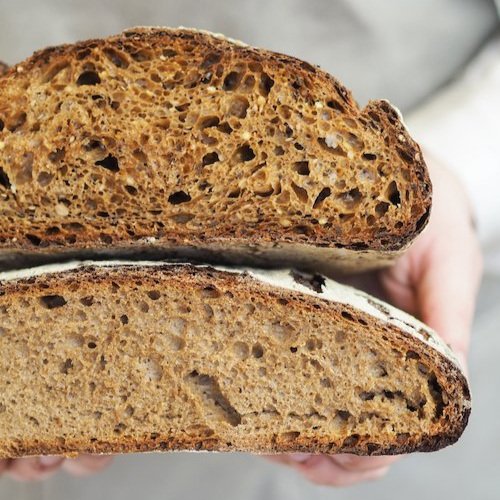
I went a little crazy this year and ended up with 82 tomato plants. They are just beginning to come in now, and I believe that one NEVER has too many tomatoes. Should there be more than I can deal with, I quarter and freeze them, variety by variety, and cook them up later for multicolored sauces. Many of  my plants did not make it this spring, with too much rain and not enough sun. But there will be plenty to see us through to October. Current high performers include my favorites:  Green Zebra, the bright orange Valencia, Ida Gold and Coeur de Boeuf Orange, the yellow Jaune Saint Vincent and Banana Leg, the fabulous Ananas, Striped Germain and Tigerella, and the always productive Russe. A new and interesting heirloom is the white Beauté Blanche de Canada, a large tomato with ivory skin and pulp and mildly acidic flavor. I confess that I am nearly breathless with excitement when I can slice multicolored varieties and arrange them on a giant white platter, season them with my homemade Fennel and Saffron Salt and sit down to lunch, with a fat slice of my toasted homemade sourdough bread. I hope you enjoy the salt:  saffron, fennel and tomatoes seem to love one another's company.

FENNEL AND SAFFRON SALT

Once you try this on a simple fresh tomato salad, you will be sold! Fennel, saffron and tomatoes make a perfect trio. Keep the salt on hand for anytime you want to add sunny flavors. I use the less expensive ground saffron here. Once the salt dissolves, the saffron bleeds a golden, reddish orange hue.

A pinch of ground saffron

3 tablespoons fine sea salt

2 tablespoons fennel seed

Combine the ingredients in a spice grinder, grinding until the fennel seeds are very fine. Transfer to a small jar. Cover and shake to blend.  Store securely covered to maintain freshness. The mixture will stay fresh for several months.

5 tablespoons flavored salt


Posted in Blog Post

July 27, 2010

Zucchini Blossoms

Last year my handful of zucchini plants produced almost no vegetables. Blossoms yes, but a paltry crop of zucchini.  Now that's pretty pathetic, because even non-gardeners know that zucchini grows like wildfire. So this year I overplanted in the zucchini department, and of course I have more than my family, houseguests, and neighbors can humanly consume. But in truth I grow zucchini for their welcoming, golden flowers. They greet you in the morning with a smile, their arms wide open. Before I go out for a morning run, I allow myself a quick tour of the garden, so as I run I can plan the day's menus, always dreaming up new ways to use up zucchini blossoms, which I consider a totally "free" byproduct of the vegetable garden. I chop them and toss them in a lunchtime frittata, stuff them with all manner of fillings -- leftover cheese, tabouleh, herbs and chopped zucchini -- and deep fry them,  give them a quick sauté, or gently steam them. I arrange them like spokes on a wheel for pizzas, paired with anchovies and capers, or arrange them on organic flour tortillas with cheese, tomatoes, and pickled peppers and set them on the grill. But the current favorite comes from zucchini blossom and pasta recipes inspired by good friends and colleagues Susan Herrmann (in her utterly complete Italian Farmhouse) and Johanne Killeen and George Germon (in their unbeatable On Top of Spaghetti). A mix of cubed zucchini, sliced blossoms, capers, black olives, and an avalanche of basil make for an idyllic July spaghetti sauce.


Spaghetti with Zucchini Blossoms, Zucchini, and Basil


Equipment: A food processor fitted with a small bowl; a large saucepan with a lid;  a 10-quart pasta pot fitted with a colander; 4 warmed shallow soup bowls.


4 cups loosely packed basil leaves

4 tablespoons olive oil

1 teaspoon fine sea salt

1 1/2 pounds fresh zucchini, trimmed and cut into a very fine dice

20 zucchini blossoms, cut into chiffonnade (4 cups loosely packed)

1 cup best-quality French brine-cured black olives, pitted and quartered

1/3 cup capers in vinegar, drained

1 cup freshly grated Parmigiano Reggiano cheese, plus more for the table

1 pound imported Italian spaghetti

3 tablespoons coarse sea salt


  1. Combine the basil, 3 tablespoons of the oil, and the fine salt in the food processor and puree.
  2. Heat the remaining tablespoon of oil in the saucepan until hot but not smoking. Add the zucchini and cook for 1 minute. Add the blossoms and cook for 30 seconds more. Add the olives, capers, half the cheese, and the basil puree and stir to blend.
  3. In the pasta pot, bring 10 quarts of water to a rolling boil over high heat. Add the coarse salt and the pasta, stirring to prevent the pasta from sticking. Cook until tender but firm to the bite. Remove the pasta pot from the heat. Remove the colander and drain over a sink, shaking to remove excess water. Immediately transfer the drained pasta to the sauce in the saucepan. Toss to evenly coat the pasta. Remove from the heat. Cover and let rest for 1 minute. Toss with the remaining cheese. If dry, add several tablespoons pasta water to moisten. Serve in the warmed bowls, passing extra cheese for garnish.

    4 Servings

Posted in Blog Post

July 24, 2010

MuresA delicious ripe berry is worth its weight in gold. Our gooseberries, black currants and red currants have had their season, finding their way into jams and sorbets. Now the dense-flavored blackberries -- mures --  are coming into their own. And never too soon! I love their haunting, winey flavor, their shiny, jet black color, the way they squish  when you pop one in your mouth. This summer, I've been making a different sorbet every day, and along with apricot and melon, blackberry sorbet gets the greatest raves. I also appreciate the fact that these fat berries are not labor intensive!

BLACKBERRY SORBET

1 quart (500 g) blackberries

2/3 cup (120 g)   organic cane sugar

1 tablespoon vodka or raspberry liqueur

1 cup plain Greek-style whole milk yogurt

Equipment: A blender or a food processor; a fine-mesh sieve;  an ice-cream maker.

Combine all the ingredients in the blender or a food processor and puree until smooth. Strain through the fine-mesh sieve to remove the seeds. Chill thoroughly. At serving time, transfer the mixture to the ice-cream maker and freeze according to the manufacturer’s instructions. For best results, serve the sorbet as soon as it is made. Do not re-freeze.

12 servings


Posted in Blog Post

July 15, 2010

Apricot Jam

We live in apricot country and I swear, I don't remember a better year. The fruits are plump, perfumed, seductive. I began making my annual batch of jam today, and use it year-round as a flavorful base for fruit tarts. The original recipe comes from The Provence Cookbook.

Maryse’s Apricot Jam/La Confiture d’Abricots de Maryse

To me, this is unquestionably the world’s greatest jam.  I generally don’t swoon over sweets,  but the first time I tasted this homemade apricot jam I  was stunned.  Not too sweet, rich with the almond-like, faintly acidic apricot flavor, this jam is full of  the fragrances and colors of Provence. The recipe comes from Maryse Jourdan, who lives in the village of Goult in the Luberon. She is one of the best jam makers I know. Whenever I use  a fresh vanilla bean, scraping out the little seeds, I reserve the pods, dry them, then bury them in a huge jar of organic cane sugar. Today I decided to add some of those pods to the jam, making for an even more perfumed sweet.    


Equipment: An unlined copper bassine à confitures, or a large-bottomed, heavy-duty stock pot.


2 pounds (1 kg) apricots,  rinsed,  halved, and pitted (reserve the pits)

1 1/2 cups (300 g) organic cane sugar

4 vanilla beans that have perfumed a jar of sugar


1. Crack 10 of the pits to reveal an almond-like nut within. Reserve these nuts, discarding the remaining pits. In a large unlined copper jam pot or a large-bottomed, heavy-duty stock potlarge unlined copper jam pot or large-bottomed, heavy-duty stock pot, combine the apricots, reserved nuts, and sugar. Stir to dissolve the sugar. Cook over moderate heat, stirring regularly, for 1 hour. Do not allow the mixture to burn or to stick to the bottom of the pan. The mixture will turn very thick and bright orange and most of the apricots will melt into a purée. Transfer to a bowl and set aside at room temperature for 24 hours. (This 24-hour aging period helps give the jam a greater depth of flavor.)


2. When ready to complete the jam, prepare four 8-ounce canning jars with lids by sterilizing them in boiling water according to the jar manufacturer’s instructions.


3. The next day, reheat the mixture in the jam pot or stock pot over moderate heat, until very thick. Transfer to the hot, sterilized jelly jars, leaving ¼-inch headroom. Seal according to the jar manufacturer’s instructions. Store in a cool, dry, place for up to 1 year.


Makes about four 8-ounce jars


Posted in Blog Post

July 14, 2010

Socca

A recent trip to Nice got me back in the socca mood. This savory warm crepe from the streets of this vibrant city are seductive and addictive. I could eat them every day, for their almost smokey flavor is haunting, and each bite just seems like a healthy vitamin pill from the sunny south. These golden brown chick pea flour crepes -- known as farinata in Liguria and socca in Nice -- are a delightful  accompaniment to any salad, with a glass of wine any time of year. The batter can be made several hours ahead, with the crepes baked at the very last moment. They are served still warm from the oven, seasoned generously with coarsely ground black pepper, then torn into raggedly shards and eaten out of hand. But this is also the sort of seemingly simple preparation that can be outrageously frustrating to get “just right.” The batter should contain oil, but the end result should not be oily. Once baked, the crepe should be just thick enough to fold into moist, torn portions, not dry handkerchiefs. The oven should be hot, but not so hot that  the socca cooks and browns unevenly. While most recipes contain a one-to- one ratio of flour to water, a friendly clerk at the Maison Barale pasta shop in Nice – where they sell a delicious chick pea flour --   advised me that one-third flour to two-thirds water was a better ratio, making for a lighter, crepe. She was right! I bake mine in a specially designed tin-lined copper socca pan, much like a flat paella pan, but any large, round, flat pan that fits in the oven is fine. I find that baking the pan for 5 minutes with just oil helps the bottom cook and brown evenly.  


Equipment: A 14-inch (36 cm) round ovenproof socca pan or paella pan

 2/3 cup (100 g) chick pea flour

1 1/3 cups (330 ml) water

1/2 teaspoon fine sea salt

4 tablespoons extra-virgin olive oil

Coarse, freshly ground black pepper


  1. Center a rack in the oven. Preheat the oven to 450 ° F (230 ° C).


  1. In a bowl, whisk together the flour, water, salt, and 2 tablespoons of oil. The batter should be thin and crepe-like.


  1. Pour the remaining 2 tablespoons of oil into the pan and brush to evenly distribute the oil. Place the oiled pan in the oven and heat for 5 minutes.


  1. Remove the pan from the oven.  Pour the batter into the pan, swirling to evenly distribute the batter. Return the pan to the oven and bake until the socca is bubbly, colored a deep golden brown and evenly dotted with little crater-like holes, about 18 minutes. Remove from the oven, and sprinkle generously with the pepper. Use a metal scraper to scrape the crepe into raggedly shards.  Serve warm.   


One 14-inch (36 cm) crepe, about 8 servings   

Posted in Blog Post

July 12, 2010

Savory Tomato Marmalade

Our friend Yale the analyst is visiting right now with his wife, Rita, and he asked if we couldn’t make a tomato marmalade, one to spoon over sourdough toast, pair with a thick slice of fresh tomato, to use as a relish for roasted vegetables, meats, poultry or fish. We set out immediately and came up with this mildly tangy, slightly sweet, savory marmalade. For our first effort, we used giant yellow Ananas tomatoes, but are now preparing the same relish with giant red Beefsteak tomatoes as well as Green Zebra, for a trio of colorful condiments. And here it is!    

 SAVORY TOMATO MARMALADE 

2 tablespoons extra-virgin olive oil

1 small onion, cubed

2 plump moist garlic cloves, peeled, halved, green germ removed and minced

1/2 teaspoon fine sea salt

2 pounds (1 kg) garden-fresh tomatoes, cored, peeled, and cubed

1 tablespoon tomato vinegar, sherry wine vinegar, or  balsamic vinegar

2 tablespoons sugar

Ground chili pepper to taste (optional)

In a saucepan, sweat the garlic, onion, oil and salt. Add the tomatoes, vinegar, and the sugar. Simmer, uncovered, for 15 minutes. Strain through a sieve, reserving the juices. Return the juices to the saucepan and reduce over high heat until thick and syrupy, 3 to 4 minutes. Transfer the tomatoes to a bowl.Pour the syrup over the tomatoes. Stir. Taste for seasoning. Add chile peppers, if using. (Store in an airtight container in the refrigerator for up to 3 days.)   

1 1/2 cups (375 ml) marmalade  


Posted in Blog Post

July 09, 2010

Cherries and Almonds

We just picked the very last of our sweet red cherries, alas, but have an abundant crop of almonds this year. So we harvested the fresh green almonds, cracked them open to reveal the crunchy green nut, anointed them with Provencal almond oil and a dash of fleur de sel, then roasted them in a moderate oven for 10 minutes . A labor of love, but worth it!   


Posted in Blog Post

July 09, 2010

Truffle Potato Chips

I love to play around in the kitchen. The other day I was seasoning a new De Buyer pan, as instructed, with potato peelings. So I asked myself, what I am going to do with two peeled potatoes? Make potato chips, of course.  Since then, I have been making a tiny batch daily. I am working on a truffle book, and in my freezer have a  good stock of various winter truffle items (thin slices, matchsticks, truffle butter, truffle salt), as well as fresh summer truffles in my refrigerator. Since truffles love potatoes, I paired them in this unconventional appetizer. Delicious with a glass of well-chilled champagne! 


Posted in Blog Post

June 28, 2010

Julia's Torchon

Saturday afternoon on my way to the hairdresser's I passed Stephanie's embroidery shop and decided that Julia needed a present.  Stephanie embroiders all of our aprons, mongrammed bread bags and kitchen towels or torchons. I chose some lovely linen towels, Stephanie and I set about choosing a type face, and within 5 minutes I had several sturdy, natural linen torchons to grace Julia's newly youthful stove.


In Julia's memoir, "My Life in France," she talks about her farewell visit to France and about the last meal she prepared using the stove. This is an excerpt:

"On our last day at La Pitchoune, we invited a group of friends for dinner. I lit a match and turned on the four-burner cuisinière; the stove made a dramatic pouf! noise when the gas lit, which scared everyone but made me smile. Then I cooked a boeuf en daube à la provençale, a splendid braised pot roast with wine, tomatoes, and herbes de Provence. Yum! It was a jolly meal, and a fitting way to close the curtain."

Yesterday, in commemoration, I prepared a fragrant, moist, unforgettably tender beef daube, blending Julia's recipe and my own. Ours was a jolly meal, indeed, and a fitting way to open the curtain.

Posted in Blog Post

Next

2011 Classes

The Truffle Extravaganza
January 24 to 28, 2011 (1 Opening)

Classic Weeks in Paris
Feb 28 to March 4, 2011 (2 Openings)
March 14 to 18, 2011 (Openings) 
March 28 to April 1, 2011 (1 Opening)

Classic Weeks in Provence
May 29 to June 3, 2011 (Full)
June 12 to June 17, 2011 (1 Opening)
June 26 to July 1, 2011 (Openings)
Sept 11 to 16, 2011 (Full)
Sept 25 to 30, 2011 (Full)

Click here to enroll in a
Patricia Wells cooking class

Click here to make a Final Payment